The history of the guitar
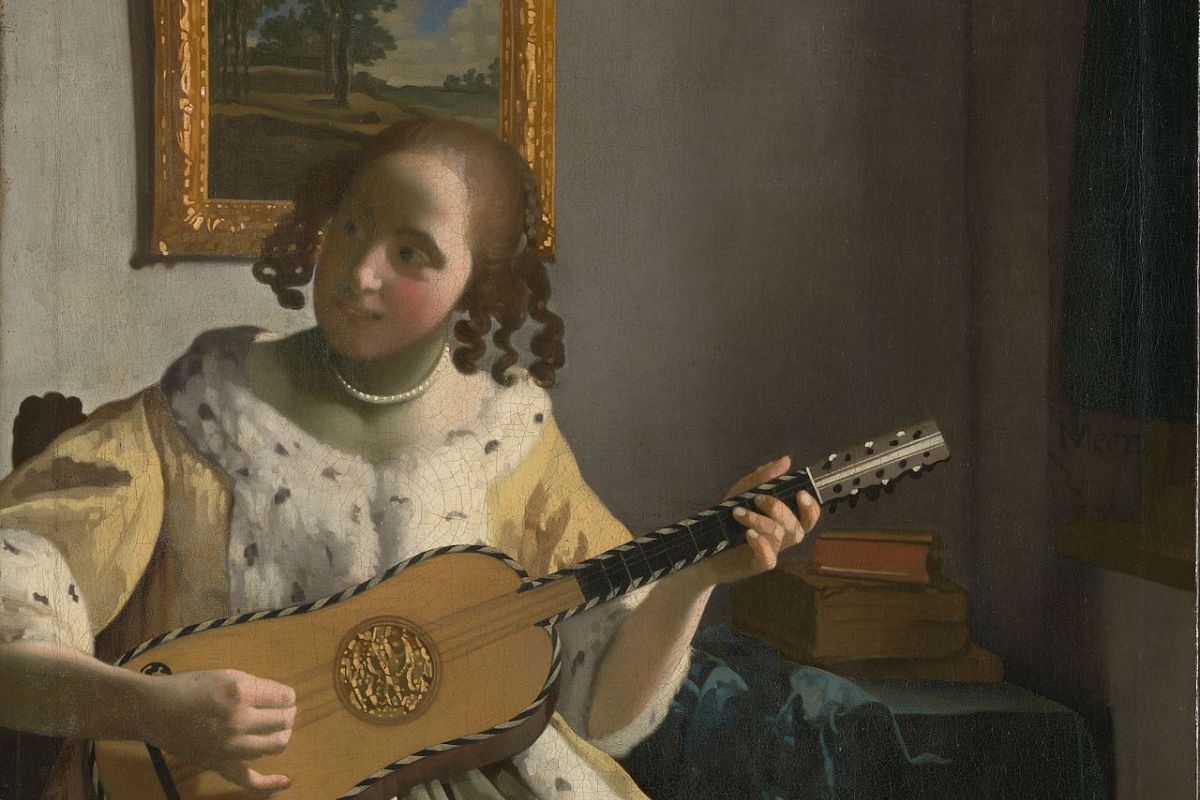
The modern guitar as we know it was born in Spain. It is the child of the Moorish and Latin guitars, from which it inherited, respectively, a long neck and a curved body. It is also thought to be related to the vihuela.
In the 14th century it was called the "guiterne" (the French form of guitarrina, a diminutive of guitarra). It had a flat body and was carved from a single piece of wood, body and neck together. Even then, a plectrum was used to strum the instrument's four single strings. In the 16th century the guiterne dethroned the lute at the royal court. The name evolved in the 17th century, first to "guiterre", then to "guitâre".
Many frescoes of the time show different versions of the instrument, with five to nine strings, in all sorts of settings. Guitar lessons were already being given then, reserved for aristocratic families, as some works attest: one shows a guitar teacher on his way to court, another a traditional guitar class of the period, with a teacher and two students.
It was while the guitar was evolving towards five courses of strings, what we now call the baroque guitar, that Mersenne described and popularised a way of playing by strumming the chords with the fingers. Tablature also appeared at this time, a system of notation independent of and parallel to classical scores (music theory).
It was most likely in the final years of the 18th century that the instrument gained its sixth string and became the guitar we know today. The three treble strings were then made of gut, while the three bass strings were silk wound with metal. Since then, many technical improvements have benefited the instrument and made it what it is today, in both its acoustic and electric forms.
Enjoyed this article? Here are a few more you might like (in French):
Want to give it a try?
A class every week or a camp during the holidays
Going further
Want to try it yourself?

Also worth reading
More articles

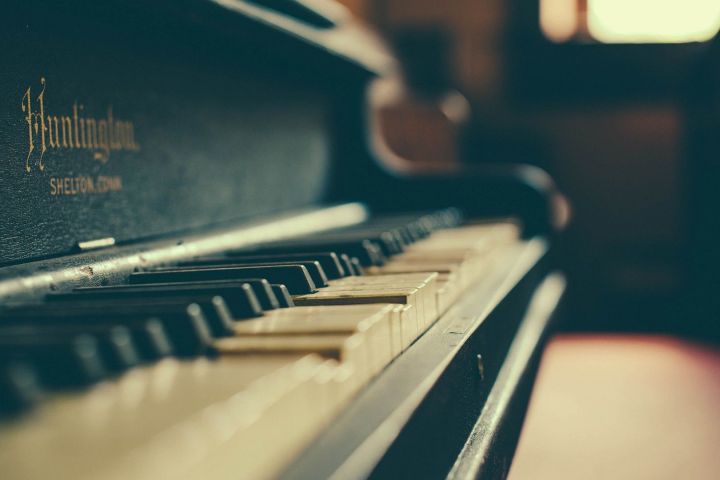
How to make the most of learning the piano
Chapters Learning the piano: first, work on hand independence Learning the piano: what is music theory? Rhythm in learning the piano Learning the piano: reading and playing at the…
Read the article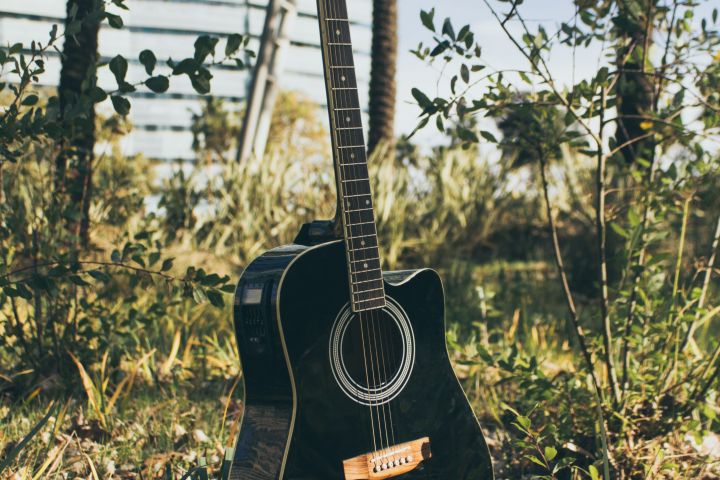
How to progress on the guitar
Contents Warming up on the guitar: an essential prerequisite The metronome: your best ally as an apprentice guitarist Hold back and play slowly! Learning chords: an important step…
Read the article
How to work on your voice
1. Warming up the voice 2. Breathing exercises 3. Projecting the notes 4. The "nasal sound" 5. How to sing in tune 6. Working on diction 7. Vocalises 8. Tongue position A few…
Read the article